Polyaspartic Floor Coatings in City of Atwater CA - a fast-curing, sun-resistant floor
Bare, stained or peeling garage concrete? We grind it, test it and coat it so you can park on a hard, sun-resistant floor again quickly.
- Licensed and insured.
- Free quotes on site.
- Replies within 1 business day.
Is a polyaspartic coating right for your Atwater garage floor?
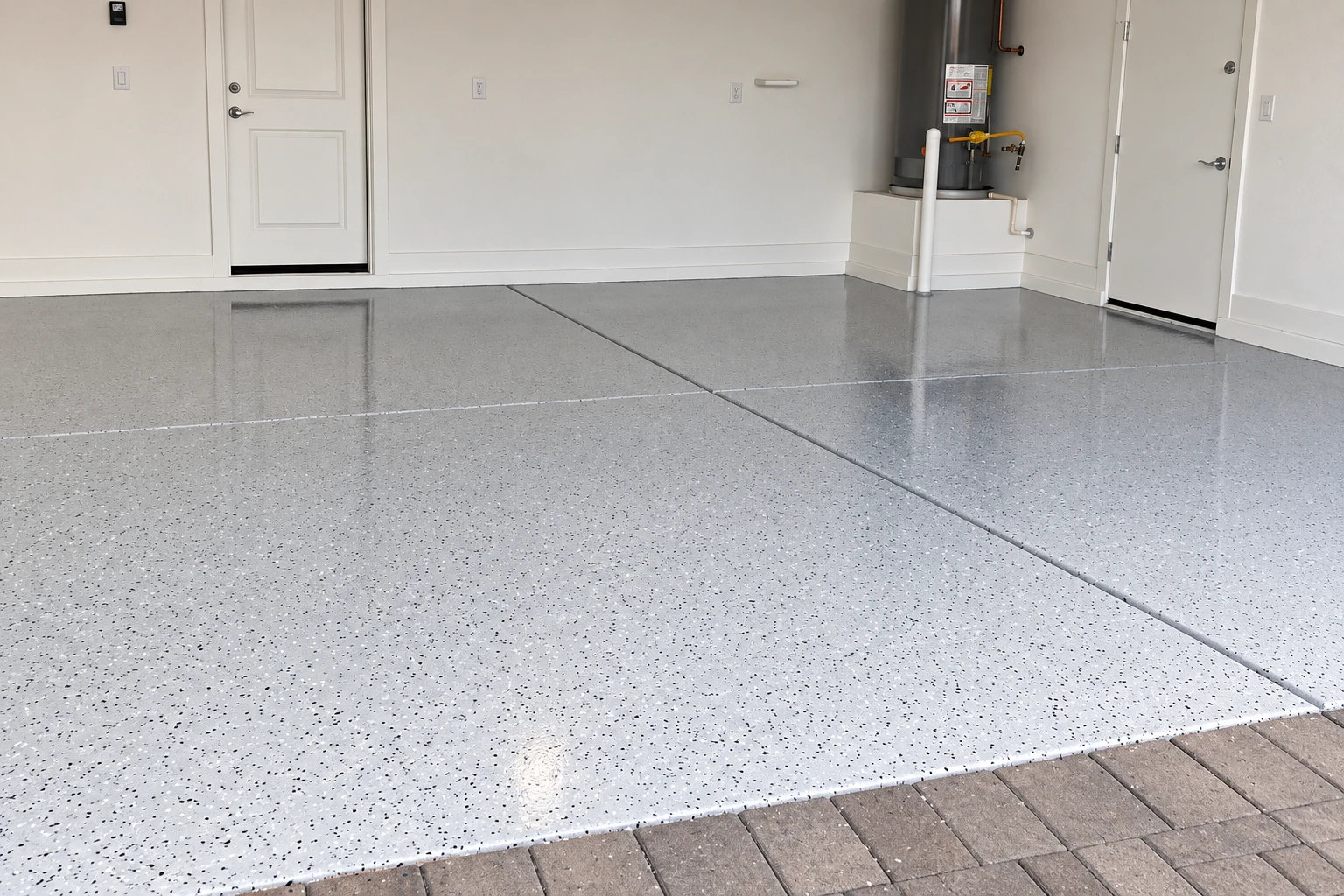
Polyaspartic floor coatings in the City of Atwater give you a hard, glossy garage floor that holds its color in the sun and cures in hours instead of days. It's a type of polyurea coating, and we put it down over ground, moisture-tested concrete.
Most people who call me about it have a stained, dusty garage slab or an old coating that's peeling, and they're comparing it with epoxy floor coatings because polyaspartic costs more up front. What moves your price is the size of the floor, how much grinding and crack repair the slab needs, how much oil has soaked in and the finish you pick. The schedule mostly turns on the prep and the moisture test, because the coating itself goes down and cures quickly once the slab is ready. You'll get your own figure in a written estimate with each step laid out.
How do you know your garage floor is ready for a new coating?
Old coating lifting under tires
Patches peeling up where the car parks usually mean the last coating went on poorly prepped concrete, and hot tires pulled it loose. The longer it's left, the more of it lifts, and the loose flakes get tracked into the house.
Coating gone yellow or chalky
An older epoxy floor that's turned amber near the door has been broken down by sunlight. That color won't come back, and the faded section usually starts wearing through before the rest of the floor.
Oil spots on bare concrete
Dark patches under the car mean oil is soaking into the slab, and bare concrete also sheds gray dust that ends up inside. The longer oil sits, the deeper it goes and the harder it is to get any coating to grip there.
How we put down a polyaspartic floor coating
This coating sets fast, so we finish the prep and have the crew ready before anything gets mixed. We start by diamond grinding the slab, because one coating maker calls for mechanical prep, shotblasting or diamond grinding, and not acid etching. Next we test for moisture, fill cracks and pits, and work on the oil stains I looked at during the estimate. Then we mix in batches the crew can lay down in time, roll the coat on, broadcast color flake if you chose it and finish with a clear top coat. Another maker notes that warmer temperatures shorten the working and drying time even more, which is one more reason the prep comes first.
Polyaspartic isn't the answer for every floor. If you want a poured, swirled look instead of flake, metallic epoxy flooring gets you there, and a polyaspartic clear coat can go on top of it. For a shop or kitchen floor that takes hot water, steam cleaning and harsh cleaners, I'll usually steer you to urethane cement flooring instead, because it's built for that kind of abuse.
Flake broadcast floor
This suits most garages, because the colored chips hide dust and small flaws in the slab and add some grip when the floor is wet. It's what most homeowners pick for a floor that gets parked on every day.
Solid color coat
This suits a workshop or hobby space where you want a clean, even surface and need to spot a dropped screw quickly. It shows dust and tire marks more than flake does, so it takes a little more sweeping.
Get a written estimate for your polyaspartic garage floor
We reply within one business day to set a time. I come out, check the concrete and measure, and the on-site estimate is free with no obligation. Photos of oil spots and built-in shelves help.
(209) 203-1590- Based in
- City of Atwater, CA 95301
- Hours
- Mon–Fri: 6 AM–10 PM, Sat–Sun: 8 AM–10 PM
What happens when you call us about a polyaspartic floor?
Here's how a polyaspartic job runs from your first call to the final walk-through, and who you'll be dealing with at each step.
Call and I come out
You call or send the form, and I come out myself to look at the floor, check the concrete and measure. Show me any oil stains while I'm there, because they change what the prep involves.
Read your written estimate
You get a written estimate that lays out the prep, the coating system and each step in order, so nothing is a surprise later. Most coating prices assume a clear floor, so built-in cabinets and shelves are either yours to move or listed as their own line.
We coat it, then walk it
Our crew works to that plan, and I check the floor along the way. When the coating is down, I go over the floor with you before we call the job finished.
Why Atwater homeowners call us for polyaspartic floors
The owner writes every estimate
I come out myself to check the concrete and write the estimate, and a small crew I trained does the work while I check it along the way. You're dealing with the person who judged your slab from the first visit to the last.
Commercial floor habits since 2017
I spent years on warehouse, plant and shop floors before starting this business in Atwater in 2017, and most of the failures I saw started in the slab, not the coating. That's why we've spent nine years putting prep ahead of everything else.
Licensed and insured for your floor
We're licensed and insured. That matters when a crew is grinding and coating inside your garage, right next to your house and everything you store there.
Backed by our satisfaction guarantee
Our work is backed by our satisfaction guarantee, and the way we keep it starts at the estimate. If your concrete isn't ready, I'll tell you rather than coat a slab I don't trust.
On this coating, the slab under it decides how the floor holds up, so the visit is where it starts. Call or send us a note and we'll set a time to look at your garage.
Polyaspartic floors and slab prep in the City of Atwater
Whether a floor coating needs a permit here isn't something I'll guess at. The city's Building Division reviews plans and inspects building work to make sure it meets local and state rules, so it's the office that decides. If your job needs a permit, we tell you at the estimate and handle it with that office, and when we're not sure, we ask them before we start. The coating itself falls under a separate set of rules. An older San Joaquin Valley air district staff report says its coating rule covers anyone who sells, offers for sale or applies architectural coatings in the district, so it's fair to ask us at the estimate how the product we plan to use fits those rules.
We're based in the City of Atwater and work in the cities around it, in Merced County and up into Stanislaus County. Plenty of the garages we see have years of oil soaked in right where the car sits, and we see the same thing on jobs in Merced and Winton. That's why I want to see the stains before I write anything down.
Questions about polyaspartic floors in Atwater
How long does a polyaspartic garage floor take to cure before I can park on it?
Usually about a day. One guide puts foot traffic at 4 to 6 hours and vehicles within 24 hours, compared with 5 to 7 days for epoxy, so in most cases you can plan on parking again the next day instead of a week later. I'll give you the timing for your floor once I've seen it.
How much does a polyaspartic garage floor cost in Atwater?
It costs more up front than most garage coatings, and your own price comes from the written estimate after I've looked at the slab. One guide lists the highest upfront cost and the need for professional installation as its drawbacks, against a lifespan it puts at 15 to 20 years. So you're paying more now for a floor that guide expects to last a long time.
Will a polyaspartic coating hold on a garage floor with old oil stains?
Not always, because one maker notes that oil soaked into concrete in most cases can't be fully removed and may keep the coating from bonding. Point the spots out when I come out, and I'll tell you what I think the floor needs before you commit to anything.
Why does moisture in a concrete slab matter for a floor coating?
Moisture coming up through the slab can blister the coating and make it fail. One maker warns about this on concrete without an effective vapor barrier, a layer under the slab that keeps ground moisture out, and puts testing before coating on the installer. We test before anything is mixed, and if the slab doesn't pass, I'll tell you.
Who do I contact about permits for floor work in Atwater?
The city's Building Division permit counter, at building@atwater.org or (209) 357-6343. That office reviews plans and inspects building work in the city, so it's the place to ask whether your project needs a permit.
How do I know if an installer will do a polyaspartic floor right?
Ask how many polyaspartic floors the crew has finished, how it preps the slab and whether moisture testing is part of the job. One guide notes that the fast cure means the installer has to work quickly and accurately, with no margin for error, so experience with this coating matters more than with slower ones.
Other floors worth a look before you decide
Metallic Epoxy Flooring
Worth a look if your space is more showroom than parking spot, since the swirled, glossy finish turns a plain slab into the room's main feature.
Urethane Cement Flooring
Built for kitchens, breweries and wash-down shop floors, where hot water, steam and harsh cleaners would wear down a thinner coating much sooner than you'd like.
Service areas for polyaspartic floor coatings
Atwater Epoxy Floors and Concrete is based in the City of Atwater, CA, and we put down polyaspartic floors in the cities around it, including Livingston and Turlock. Below are the 12 cities that have their own page on our site.
City of Atwater, CA
Book a look at your garage slab
Send photos of the floor, any oil spots and any built-in shelves with the form, and I'll come out already knowing what to check.